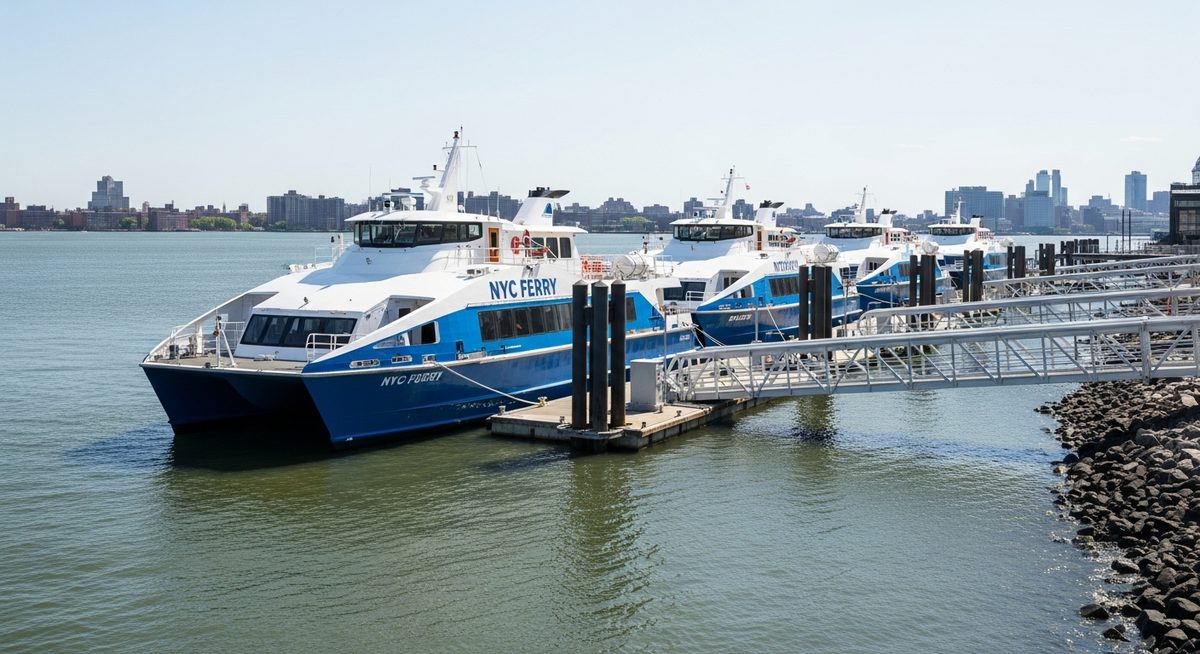
The NYC Ferry fleet had 38 vessels. Every one of them had functional IT infrastructure. Almost none of it was the same.
Access points were falling off walls. Cables were disorganized. Configurations varied from boat to boat. External cellular antennas were outdated or installed differently on every vessel. When something broke, the team had to first track down which vessel, then figure out that specific boat's setup from scratch. Only one team member had the knowledge to fix most problems. That was a single point of failure across the entire fleet, operating in plain sight.
The operation was struggling to meet its 95% uptime KPI required by the city contract. Something had to change.
The real problem was not technical
The instinct in IT is to start with the technology. New access points. Better switches. Faster connections. The core problem on the NYC Ferry fleet was not that the equipment was bad. It was that nothing was consistent.
When every vessel is configured differently, you cannot build procedures. You cannot train people efficiently. You cannot troubleshoot quickly because the first step is always figuring out what you are looking at. You cannot scale, because adding a new vessel means inventing a new setup from scratch.
The consistency problem created the knowledge gap. The knowledge gap created the single point of failure. The single point of failure created the uptime problem. Fix the root cause and everything downstream gets better.
How we did it
I led a 15-person team through an 8-month standardization effort across all 38 vessels. The catch: we had to do it while simultaneously running daily operations. Ferries do not stop sailing because IT needs to rewire a rack.
We started with physical installation standards. Exact rack layouts. Exact cable management. Exact AP mounting positions. If you opened the IT closet on any vessel, it should look identical to every other vessel in the fleet.
Then we standardized every configuration. Firewalls. Cisco switches. Netgear switches. NVRs. Access points. Destination route systems. The passenger-facing media displays that show route information and announcements. Every device, every config, every setting, documented and uniform.
Training by doing
I did not hand my team a manual and send them out. I worked side by side with them on the first vessels. We did the installations together so they could see the standard being built, ask questions in real time, and understand not just what we were doing but why.
After the first batch, I broke the team into smaller groups to scale the rollout across the fleet. Each group followed the same standard, and I maintained a QA process throughout to make sure nothing drifted. When you are standardizing 38 vessels, the temptation to take shortcuts grows with every boat. The QA process was the guardrail against that.
What changed
The single point of failure disappeared. Any team member could walk onto any vessel and troubleshoot effectively, because every configuration was identical. The knowledge that used to live in one person's head now lived in the standard itself.
Passenger-facing systems became consistent across the fleet. Route displays, announcements, and media systems all worked the same way on every boat. That matters when you are operating a public transit system on a city contract.
The number that mattered most: the SVP of operations hit the 95% uptime KPI required by the city contract. That was not just an IT win. That was a contractual obligation the entire operation depended on.
Where the methodology came from
This project is where I learned what I later wrote about in the global standardization post: standardization is a leadership problem, not a technical one. The technical decisions on the ferries took weeks. Getting 15 people to execute them consistently across 38 vessels, while the boats kept sailing, took months. The hard part was always going to be the second part.
What we built on those 38 ferries became the blueprint for everything that came after. When the company later tackled global standardization across 167 vessels and 83 offices, the methodology was already proven. The mistakes had already been made. The QA process already existed. New York Harbor was where it was born.
Adam Cooper is a Technical Director writing about distributed IT operations, maritime technology, and AI in production environments. Connect on LinkedIn or Send Email.